

Not every pie is the same, but no matter how you slice it, there is round appeal!
Pizza, let’s face it, tops almost everyone’s list of favorite foods. But pizza comes in many different styles. To get the full slice on the subject, let’s dig into the details.
Neapolitan
Known as Naples-style pizza, Neapolitan pizza is a style made with tomatoes and mozzarella cheese. And there are rules about the specifics of tomatoes and mozzarella that primarily focus on origin of the products. Think San Marzano tomatoes and cheese that is made with milk from water buffalo raised in Italy. Genuine Neapolitan pizza dough consists of wheat flour, natural Neapolitan yeast and water. Typically, one must purchase the whole pie when indulging in this style of pizza. Buona Vita’s pies are a good example of a traditional Italian pizza.
Hand-Tossed
Hand-tossed pizza is ubiquitous in America and is often seen in Park City. The yeast dough is tossed by hand to form a uniform thickness and has a thicker and chewier base than Neapolitan.
At Red Banjo Pizza, their family recipe is hand-tossed to perfection and, uniquely, the pizzas are served with a fresh lemon you can squeeze over the top.
“My grandmother started to work on a recipe and, over several years, kept that same recipe,” says Tana Toly. “Today, we use the same recipe, and that is why I would say we have stayed in business. We don’t freeze our dough; it is made fresh every day.”
Flatbread
Flatbread pizza is traditionally thinner, crisper and faster to cook. Plus, because there is less bread, some consider it healthier. You can find this style on many menus, typically at restaurants that don’t necessarily specialize in pizza.
Flatbreads are on the menu at The Spur Bar & Grill, which always has a lineup of options. The barbecue chicken is a favorite. Cena is another go-to for sharing a flatbread or two with the table, and the menu changes seasonally. Davanza’s isn’t a flatbread pizza, but it has a similar thin, cracker-like crust style.
New York
New York-style pizza is made with a characteristically large, hand-tossed, thin crust and is often sold in wide slices to go, or as whole pizzas in an XL size. The crust is thick and crisp along its edge, yet soft, thin and pliable enough to be folded in half to eat.
Originating in New York City in the early 1900s and derived from Neapolitan pizza, it was the first pizza to be sold by the slice. According to history, in 1905, an employee at Lombardi’s began making pizza, which sold for five cents a pie. Customers who couldn’t afford a whole pie would offer what they could for a slice, wrapped in paper and tied with string.
In Park City, Big Daddy’s Pizza and Este are two classic spots for New York-style slices.
Deep Dish
Deep-dish pizza was invented in Chicago and differs from other types in many ways. The most obvious is the layering: while most pizzas go crust, sauce, cheese, toppings—deep dish flips it, starting with cheese on the bottom, then toppings, then sauce.
The sauce is made with whole plum tomatoes and roasted garlic, giving it a slightly sweeter flavor. The crust is made from semolina flour, buttery and crisp with no gumminess.
Another key factor is baking. Deep dish takes about an hour to bake, using two different ovens kept at two temperatures. For comparison: Neapolitan takes 8–12 minutes in a super-hot oven, and New York takes 12–15 minutes.
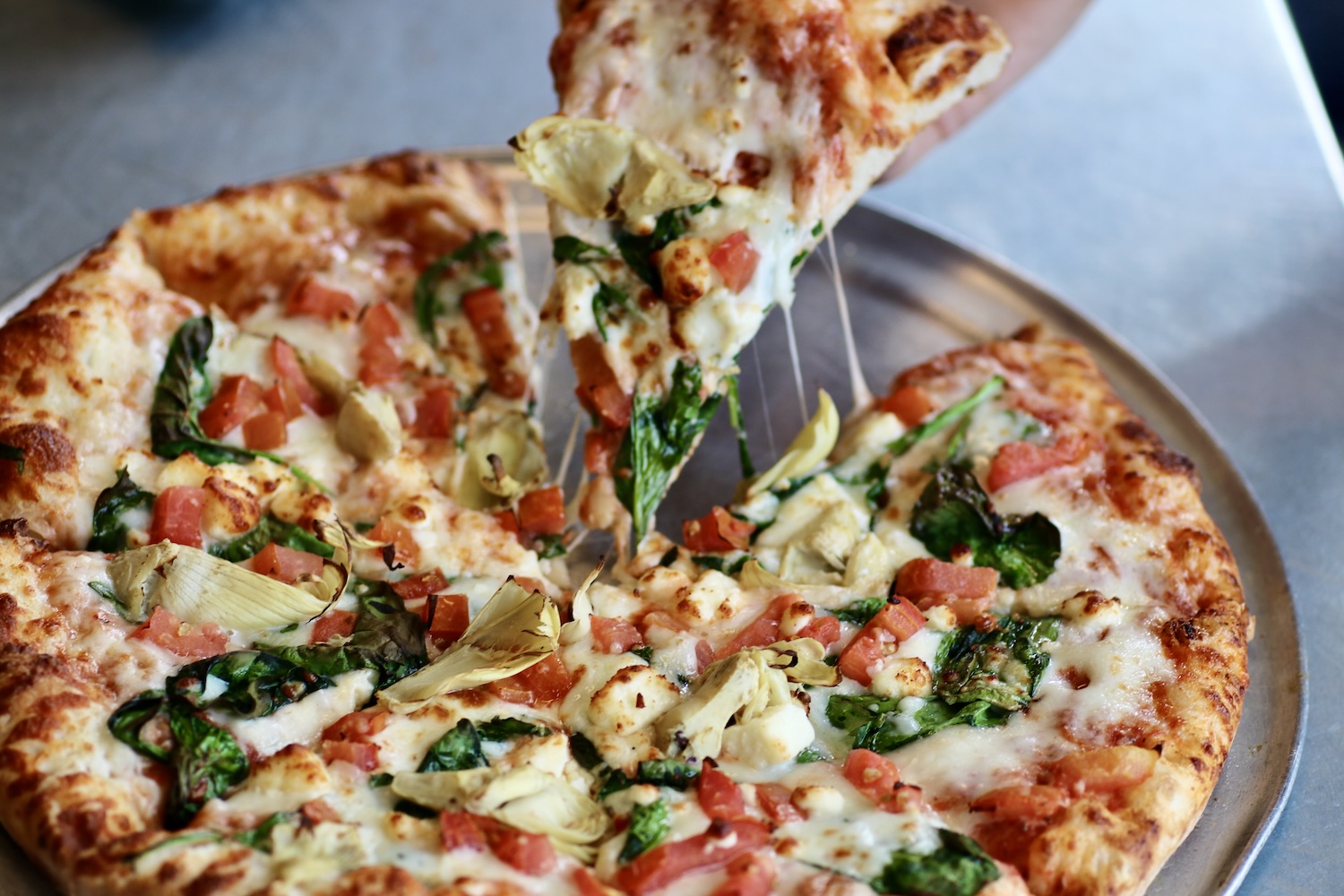
Park City Pizza Guide
Red Banjo Pizza: Traditional American-style
The Brass Tag: Brick-oven pizza
Boneyard Saloon & Kitchen: Artisan wood-fired
Fuego: Hand-tossed Old World-style
Loma: Wood-fired, Italian-inspired
La Stellina: Italian-style with New York influences
Versante: Hearth-baked, Italian-American style
Matilda: Sourdough pizza crust
Buona Vita: Traditional Italian pizza
Big Daddy’s Pizza: New York-style with options (hand-tossed, thick, thin, gluten free)
Este: Authentic New York-style
Maxwell’s East Coast Eatery “Fat Kid Pizza”: East Coast-style, New Jersey-inspired
Davanza’s: Thin-crust pizza
Cena Ristorante: Italian-style flatbread pizza
The Spur Bar & Grill: Brick-oven flatbread pizza
Main Street Pizza & Noodle: Traditional American-style
Top of Main Brew Pub: Pub-style Rock Brewing: Wood-fired in an Italian oven
At Home Pizza-Making Tips
- Make sure dough is at room temperature before you try to stretch it but also not overly warm, as this can lead to tearing.
- Preheat the oven and make sure it is hot when you are ready to bake.
- Get the dough as thin as possible without compromising the base.
- When it comes to toppings, less is more. Use quality ingredients but don’t overload the dough.
- To prevent sticking, use flour or parchment paper trimmed to the edge.
- Rotate the pie while baking for even cooking.
- Want to try your hand at making pizza at home? Pick up an Ooni Pizza Oven, a Gozney, or a Camp Chef pizza attachment for the grill.


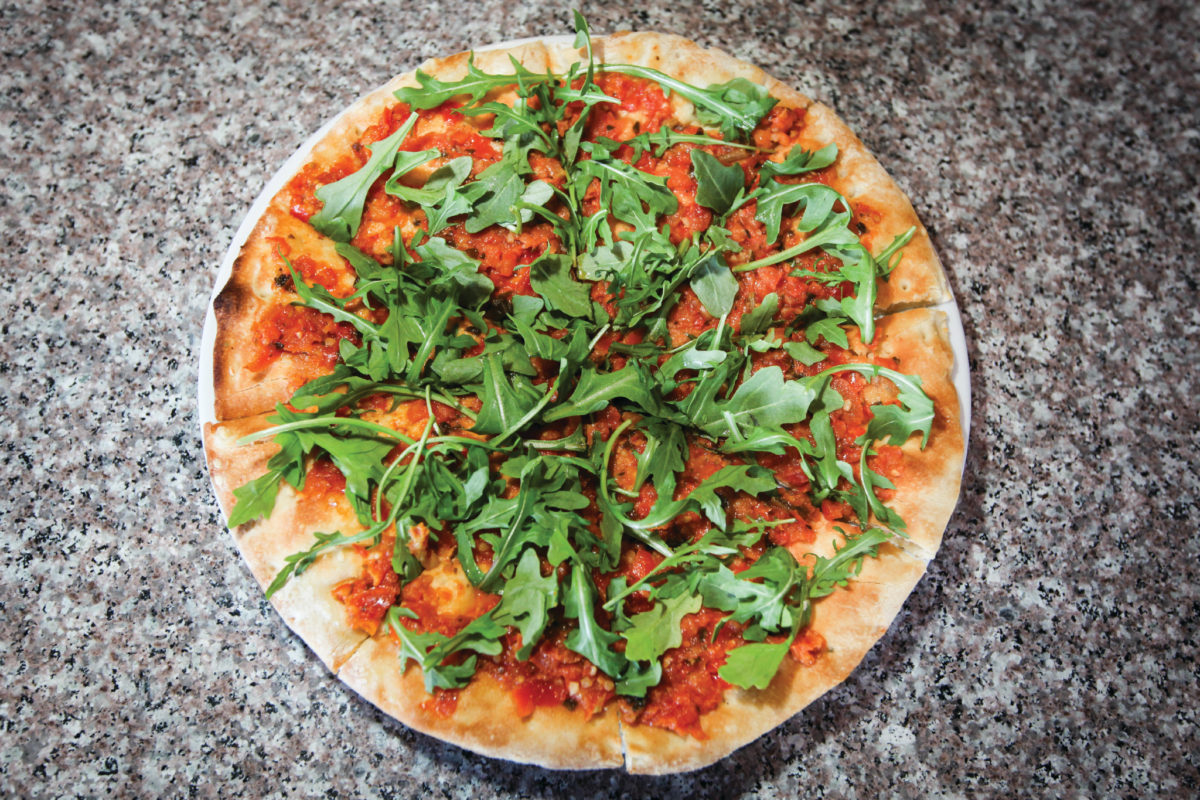

Ingredients
- 5–6 Roma tomatoes
- 1/4 cup olive oil
- 2 tbsp thyme, chopped
- 2 tbsp garlic, chopped
- Salt and pepper
- 1/2 cup basil leaves, thinly sliced
- 1 fresh pizza dough, uncooked
- 1 cup arugula
Instructions
- Preheat oven to 375°F and place rack in the middle position.
- Cut tomatoes in half lengthwise; scoop out seeds.
- Lay tomatoes cut side up on parchment paper on a baking sheet. Drizzle with olive oil and sprinkle with thyme and 3/4 of the garlic. Roast for 40 minutes.
- Increase temperature to 400°F and cook for 20 more minutes until caramelized. Let cool.
- Chop tomatoes and mix with remaining garlic, salt, pepper, and basil. Refrigerate.
- Bake pizza dough until light brown. Add bruschetta mixture, spread to 1 inch from edge, top with arugula, slice, and serve.