


Tips, tricks and a recipe for brewing “booch.”
by Megan Rule
photos by Blake Bellet
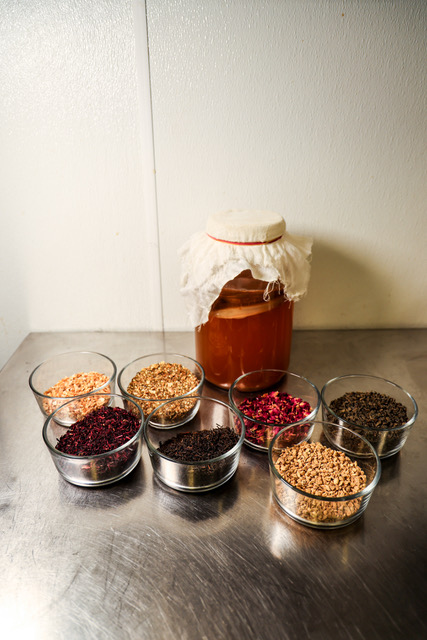
THE FIRST SIGN THAT KOMBUCHA is alive is the fizz. A soft hiss escapes when the bottle opens, followed by bright, tangy aromas of fruit and tea. What began centuries ago as a simple fermented drink has found new life in kitchens, cafes and tap lists across the country.
For Hannah Banick, founder and co-owner of Han’s Kombucha, the journey started simply — with a jar, some tea and curiosity. She began experimenting with home brewing in college. Banick graduated from the University of Utah with a degree in public health and initially planned to pursue a career in healthcare administration. She says much of healthcare is centered around systems, margins and efficiency, often at the expense of actual well-being, and she didn’t feel connected to the people she wanted to serve.
After asking herself how she could directly improve the health of people in her own community, Banick brewed the idea of Han’s Kombucha. “I realized that improving health doesn’t always look like hospitals or clinics,” she says. “Sometimes it looks like creating something approachable that helps people make better choices without feeling like they’re sacrificing joy. I saw an opportunity to turn soda drinkers into kombucha drinkers and to make a product that supported health in a way that felt inclusive and realistic.”
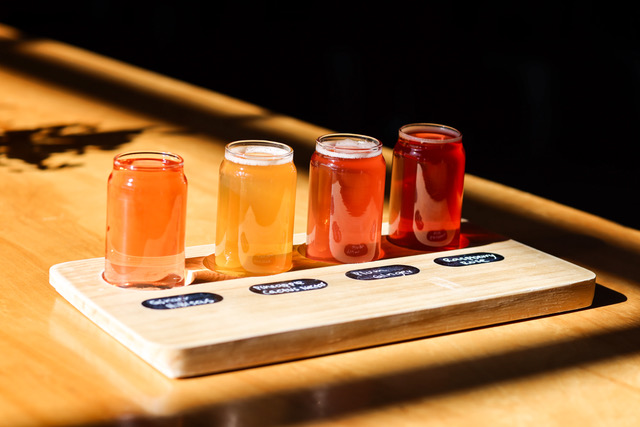
What began as a small side hustle quickly became something much bigger. “Without fully realizing it at the time, I had taken my first real step into entrepreneurship. That decision ultimately shaped the early success of Han’s Kombucha and clarified my purpose. I didn’t leave public health. I just found a different way to practice it.” Han’s Kombucha is made using traditional methods with tea and cane sugar, but the ingredients and final flavor are quite unique. “Han’s Kombucha doesn’t have the harsh, vinegary flavor most people associate with kombucha,” Banick says. “We gently ferment and use less sugar in our brew, as well as flavor it with fresh fruit juices, herbs and purees. Since we’re a small business, we can also create unique flavors, both in our core collection available year-round and in our seasonal flavors. Past seasonal flavors have included apricot/thyme, blackberry/juniper and citrus/vanilla/sage.”
WHY BREW?
1. IMPROVED DIGESTION
It is full of probiotics, which are bacteria that can help improve gut health and aid digestion.
2. INCREASED ENERGY
It contains small amounts of caffeine and B vitamins, which can help boost energy levels.
3. IMMUNE SYSTEM SUPPORT
Probiotics may help strengthen the immune system and improve overall health.
4. DETOXIFICATION
It contains antioxidants, which can help neutralize toxins in the body.
5. IMPROVED JOINT HEALTH
It contains glucosamines, which can help support joint health and reduce inflammation.
6. REDUCED RISK OF CHRONIC DISEASES
Some studies suggest it may help reduce the risk of chronic diseases such as heart disease, diabetes and cancer.
7. LOW-SUGAR ALTERNATIVE
It is a lower-sugar substitute for sodas and makes an excellent nonalcoholic cocktail alternative.

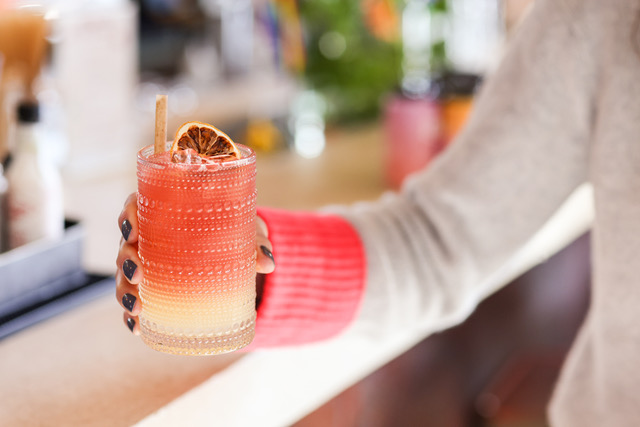
Ingredients
- • 1/2 ounce fresh lemon juice
- • 1/2 ounce simple syrup
- • Han’s Kombucha Raspberry Rose
- • Dried lemon, for garnish
Instructions
- Add the lemon juice and simple syrup to a tall glass filled with ice.
- Top with kombucha and gently stir to combine.
BASIC KOMBUCHA RECIPE


Notes
SPECIAL EQUIPMENT NEEDED
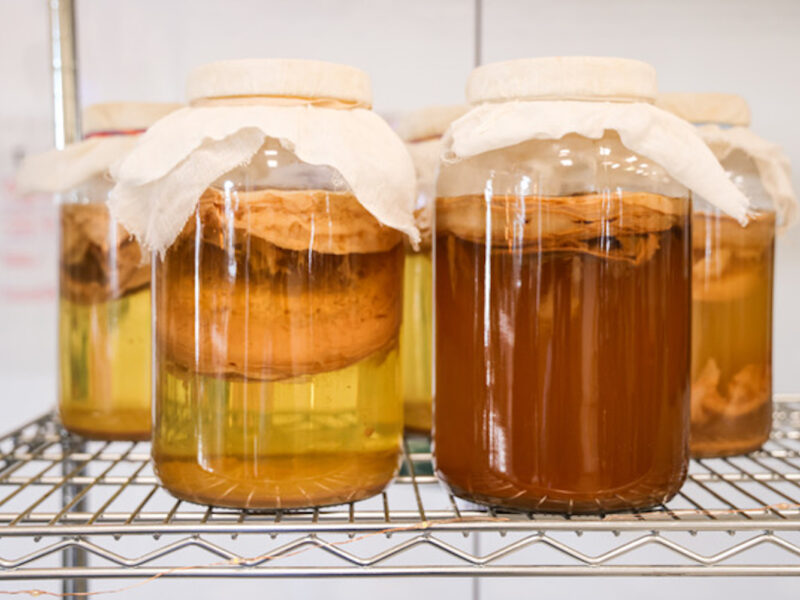
- 1-gallon glass jar
- Cheesecloth, secured with rubber band, for the top
- 4-quart pot
- Tea-steeping bag or filter (the SCOBY does not like coming into contact with loose tea particles, so be careful to filter them out.)
- SCOBY and starter liquid (SCOBYs and starter liquid can be purchased from Han’s Kombucha.)
- Swing-top bottles (These are used for secondary fermentation, where carbonation and flavor development happen.)
Ingredients
- 1 quart water
- 3 teaspoons green tea leaves
- 7 teaspoons black tea leaves
- 1/4 cup raw cane sugar
- 1 quart additional cold water
- 1 SCOBY and 1 to 1 1/2 cups of the kombucha it was in
Instructions
- Bring 1 quart of water to a boil.
- Add the green and black teas and steep for 15
- minutes, then remove the tea leaves or bags.
- While the tea is still warm, stir in the sugar until fully dissolved.
- Add 1 quart cold water to help cool the mixture.
- Once the tea is below 90 F, pour it into your fermentation jar and add the SCOBY and starter liquid. Cover the jar with a breathable cloth secured with a rubber band. Let it ferment at room temperature for 10 to 14 days. Keep the storage area between 72 and 78 F.
- Taste along the way. Use a straw to sneak a sample from under the SCOBY, or use the spout if your jar has one. At this point, you can add flavorings such as fruit, juice and herbs. When it tastes right to you, transfer the kombucha into clean jars and refrigerate to drink as-is or pour into clean swing-top bottles for secondary fermentation (2-5 days). If you prefer a more vinegar-forward kombucha, add slightly more sugar and allow it to ferment longer.
- Lower temperatures cause a slower ferment, and higher temperatures cause a faster ferment.
- Always save at least 24 ounces of kombucha plus the SCOBY as a starter for your next batch.
WHAT TO LOOK OUT FOR
- Mold: If you see fuzzy blue, green or black mold on the surface, discard the batch and sanitize everything before starting again.
- Smell: A healthy batch will smell like sweet tea at first and gradually become more vinegary. If it smells rotten, cheesy or unpleasant, discard it.
- Cleanliness: Always wash your hands and sanitize tools and containers. Contamination is the most common reason kombucha goes wrong.
- Pressure build-up: During secondary fermentation, carbonation can build quickly. Be sure to burp your bottles daily. A sticky, fruit-bombed ceiling is only fun once. A healthy kombucha will become slightly cloudy, develop a new SCOBY and shift from sweet to pleasantly tart over time. You’ll notice gentle carbonation during secondary fermentation and clean, balanced flavors. When it tastes refreshing, lightly tangy and not overly sweet or funky, you’re on the right track.
HOW TO USE
- Cocktails & Mocktails
- Kombucha works well in place of citrus or soda water. It adds acidity, light effervescence and layered flavor without overwhelming a drink. Build spritz-style drinks or add complexity to spirit-free mocktails. It pairs especially well with gin, vodka, tequila and herbal liqueurs, as well as fresh herbs, citrus and bitters.
- Cooking & Marinades
- Kombucha is naturally acidic, making it an excellent marinade for meats and vegetables. Acidity helps tenderize proteins, while fermented flavors add depth. It pairs well with chicken, pork, tofu and mushrooms. Think of it as a replacement for vinegar or citrus juice in a marinade.
- Salad Dressings & Sauces
- Kombucha can be whisked into vinaigrettes in place of vinegar or lemon juice. It adds brightness and a subtle. funk that pairs well with olive oil, honey, mustard and fresh herbs. A splash can also bring balance to sauces, slaws and grain bowls.
- Fermentation & Pickling
- Kombucha can also jump-start fermentation. It can act as an acidic base for quick pickles or be added to vegetable ferments for extra complexity.